- 19 November 2026
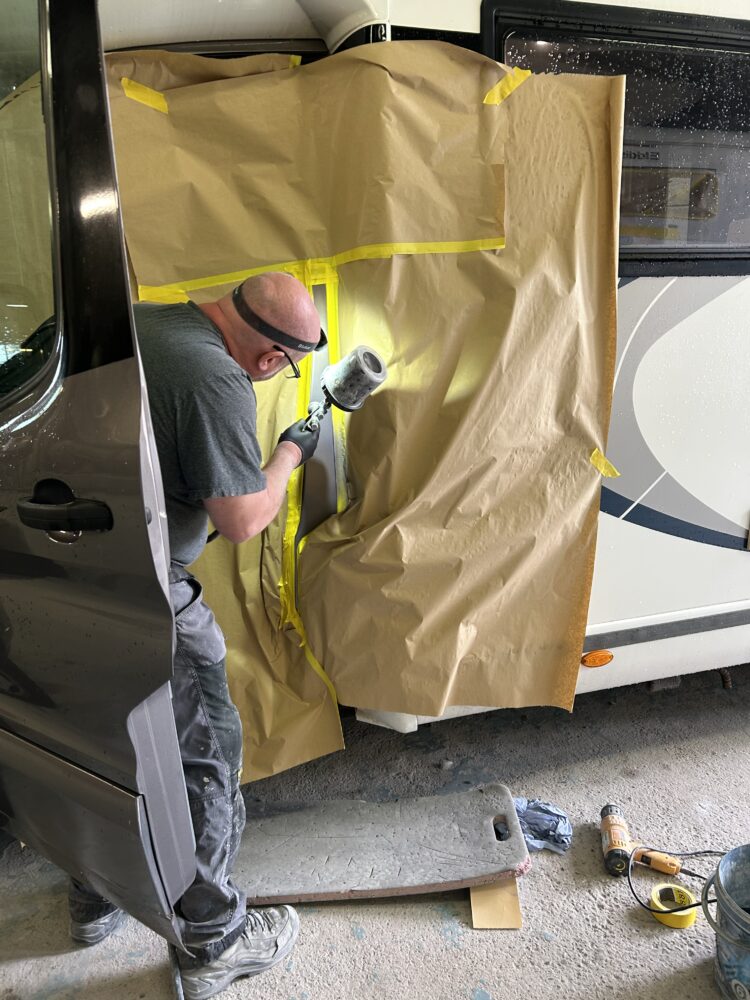
If you’ve ever had a repair quote and wondered why the price depends so much on where the damage is, the answer usually comes down to the material. Motorhomes and caravans aren’t built from one single material. Most use a mix, chosen for weight, insulation and cost and each one reacts differently when it’s damaged.
GRP (also known as fibreglass), aluminium and composite panels all need a different repair approach and knowing which you’re dealing with is the first step to getting it fixed properly. In this guide we’ll explore the most common motorhome construction materials and explain why it’s worth having motorhome repairs carried out by technicians who understand how each one behaves.
GRP also known as fibreglass, is commonly used for the roof, front and rear mouldings as well as high-moisture interiors.
Why It’s Used:
GRP is light, strong and can be moulded into smooth, curved shapes. It also stands up well to weather and moisture over time.
How It Behaves When Damaged:
When damaged, the GRP cracks instead of denting and in some cases delaminates, meaning the layers inside the panel start to separate. This isn’t always obvious from the outside and a small crack on the surface can hide a much bigger problem underneath. This is why it’s always worth having the GRP damage looked at properly, rather than simply filled in.
How We Repair It
We match the repair to the original panel, using the right resin and fibre for the job. Rather than just filling the crack, we rebuild the strength of the panel underneath, so the repair actually lasts, not just looks right.
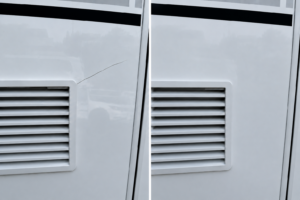
Aluminium is widely used for the outer skin of sidewalls, often with a smooth or textured “hammered” finish. On most modern vehicles that skin is bonded to an insulated panel behind it. Aluminium is also used for trims and some structural parts. How the body is built varies by manufacturer and model.
Why It’s Used
Popular for its lightweight feel and natural corrosion-resistance, aluminium is a low maintenance option for motorhomes, without compromising on strength.
How It Behaves When Damaged
On impact, aluminium tends to dent or crease. Working the metal repeatedly hardens it, making it more brittle and more likely to crack. If a panel has been stretched, it often needs replacing rather than repairing. Aluminium can also corrode, particularly where it meets steel fixings or where damage has broken the protective finish.
How We Repair It
We assess the extent of the damage first, since not every dent needs the same approach. Where the panel can be worked back into shape, we do it carefully to avoid stretching or work-hardening the metal further. Where the damage is more significant, we’ll talk you through whether a repair or a replacement panel makes more sense.
Many modern motorhomes and caravans use composite panels. These are made from multiple bonded layers with a foam or timber core sandwiched between thin outer skins. Smaller components like trims, corner pieces and bumpers are commonly made from ABS, a moulded plastic, rather than the full sandwich construction used for the larger panels.
Why It’s Used
Composite panels are lightweight and rigid. They give manufacturers strength without adding unnecessary weight, and they help insulate the living area from heat, cold and noise.
How It Behaves When Damaged
Composite panels can be deceptive when damaged. An impact can crush the core or break the internal bond between the skin and the core, while the outer surface still looks intact. This means the damage isn’t always visible from the outside, and a panel that looks fine at a glance can be significantly weaker underneath. This is one of the reasons a proper assessment matters more than a quick visual check.
ABS parts tend to crack or split on impact. Depending on the damage and whether replacement parts are available for your model, they’re either repaired or replaced.
How We Repair It
We check beyond the surface, not just the visible damage, to understand what’s happening with the core and the bond underneath. Depending on what we find, that might mean a targeted repair to the affected area or replacing the panel section entirely if the core has been significantly compromised.
You don’t need to know the exact construction before getting in touch, but a few things can help:
If you’re still unsure, send us a few clear photos of the damage and the area around it. We can usually tell you what we’re looking at and what’s likely to be involved.
As we’ve covered, the range of motorhome construction materials all behave differently when damaged and each require a different repair approach to put right properly.
That’s why a motorhome or caravan that has been in an accident or have damage to its construction is worth having assessed by a specialist. A general car body shop may not see much GRP, composite or bonded construction. A motorhome repair specialist works with these materials regularly and knows how to repair them without causing further damage. You can see examples of our work here.
We always start with an honest assessment of the material and the extent of the damage before quoting for any repair. It affects the method, the cost and the timescale, so it’s worth knowing from the outset rather than finding out partway through the job.
If you’re not sure what your motorhome’s bodywork is made of, or you’ve had damage and want an honest opinion on what’s involved, get in touch and we’ll take a look.

Cannock Resprays has relaunched under new ownership. Natalie and Lewis talk about taking on the business, growing demand and their plans for the future.