Another touring season is behind you, and it’s nearly time to tuck your motorhome away for winter. You probably already know to drain the water and turn off the gas, but what about the bodywork? Before it goes into storage, it’s worth giving it a good wash and taking a careful look at the panels and seals for any cracks or soft spots.
If you find damage, get it repaired before the cold weather sets in. Water that creeps into even a small crack can freeze and expand over the winter, slowly working its way into the panels behind it.
It’s an easy job to skip when you’re packing up at the end of the season. But small damage doesn’t stay small for long. A hairline crack on a rear corner or a window seal that has started to lift might not look like much now. After a few months of rain and frost, it could mean a much bigger repair in spring.
The same checks apply to caravans and campervans, so this guide is just as useful if you’re putting a tourer away for the winter. This guide shows you what to look for, how to protect your bodywork over winter, and what to do if you find damage.
The Usual Winterising Jobs
Draining the water system, turning off the gas and looking after the batteries and tyres all matter. Every motorhome is different, so follow your manufacturer’s handbook for these. If your habitation check is due, having it done before storage means any damp or seal problems are picked up early.
The rest of this guide covers the part most checklists miss: the bodywork.
Why the Bodywork Matters Over Winter
Most motorhomes are built from GRP (glass reinforced plastic), aluminium or composite panels. Each one reacts differently to damage. We explain the differences in our guide: What Is Your Motorhome Actually Made Of?
Whatever your motorhome is made of, the biggest risk over winter is water getting in.
- GRP is rigid, so when it takes a knock it tends to crack rather than bend, and that crack gives water a way in.
- Composite panels can be damaged inside even when the outside looks perfectly fine.
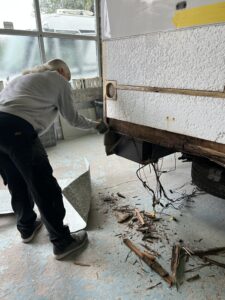
A worn seal around a window can also let water seep into the wall for months before you notice any sign of it. Over winter, your motorhome sits still in the cold and wet, often for months. That gives small damage time to get worse without anyone noticing.
How to Check the Bodywork Before Storage
Set aside an hour before your motorhome goes into storage. A careful look now can save you a much bigger repair in spring.
1. Wash it first
Dirt and road grime hide cracks and chips. Washing also removes road salt, which you don’t want sitting on the paintwork all winter. Keep a pressure washer well away from seals and joints.
2. Walk round it in good light
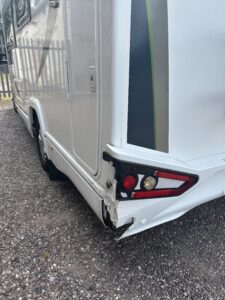
Look for cracks, chips and dents. Pay close attention to the front and rear corners, the lower panels and the roof edges. These are the areas that take the most knocks.
3. Check the seals and trims
Work your way along panel joints, window frames, rooflights and the awning rail. Note any gaps, splits or trims that have started to lift.
4. Press gently on the walls
Try the lower walls and the areas around windows and doors. If a panel feels soft or spongy, water may already have got in. That needs looking at before winter, not after.
5. Look for bubbling or rippling
A panel that looks lifted or uneven can be a sign of delamination. This is where the layers of a panel start to separate, often because water has got in.
6. Take dated photos
Photograph anything you find, plus each side of the vehicle. When it comes out of storage, you can compare and spot any changes.
Only check the roof if you can do it safely from a platform or ladder. Don’t walk on a roof unless the manufacturer says it’s designed for it.
How to Protect the Bodywork While It’s Stored
- Use a breathable cover made for motorhomes. A non-breathable cover can trap moisture against the paintwork. A loose one can flap in the wind and scuff the surface.
- Choose your spot carefully. If you can, park away from trees. Falling branches, sap and bird droppings all mark paintwork.
- Keep the vents clear. Good airflow inside helps stop damp building up in the walls.
- Check on it through the winter. Look it over after storms or heavy frost, and clear leaves from the roof edges.
- Protect the paintwork. A coat of wax or polish before storage gives the surface extra protection through the colder months.
Found Damage? Why Winter Is the Right Time to Repair It
If your check turns up a crack, a soft spot or a failed seal, it’s worth dealing with now rather than waiting for spring.
- It stops a small problem growing. The sooner damage is sealed and repaired, the less chance water has to spread into the panels.
- You’re not using it. A winter repair means no lost trips when the weather improves.
- Spring gets busy. Many owners only find damage when their motorhome comes out of storage. Booking early helps you secure a slot before the season starts.
Not sure whether it needs repairing? Send us a few photos via our repair assessment form and our team will take a look. With 70+ years combined experience in motorhome, caravan and campervan bodywork, we’ll give you honest advice. We’ll tell you whether it needs attention now or can wait.
Find out more about our motorhome repairs, or see for yourself by looking at our latest work.